

Introduction
Eyes are one of the most precious gifts in human life. From studying, driving, working on computers, or enjoying nature, our eyes play a huge role. But today, eye problems are increasing at a fast speed. Digital devices, stress, pollution, and lifestyle changes have made eye care more important than ever.
This has also increased the demand for optometrists, who are professionals trained in diagnosing, managing, and treating vision problems.
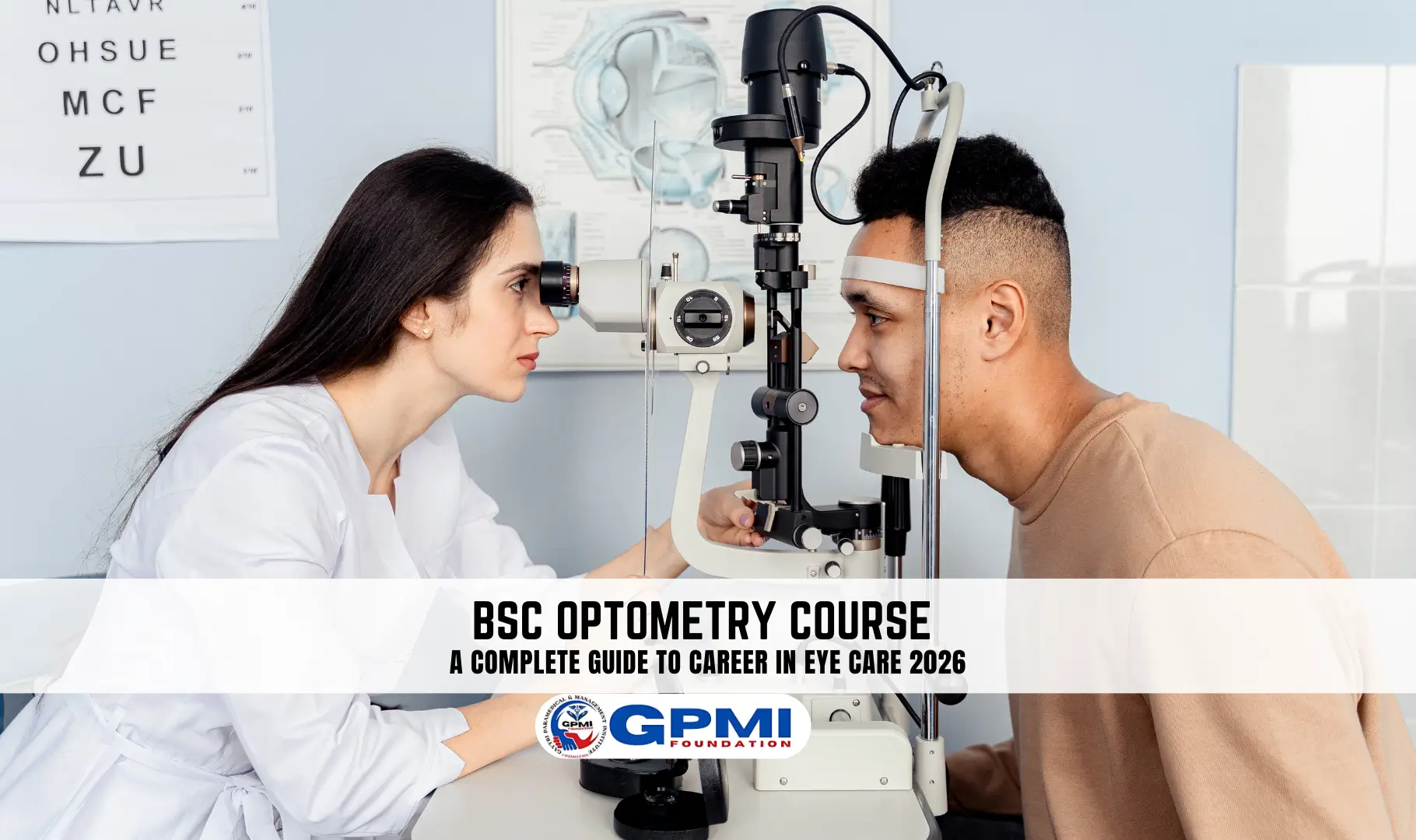
One of the best courses to build a career in this field is the BSc Optometry course. It is a popular undergraduate program that trains students in eye examination, contact lenses, vision therapy, and eye disease management.
If you are a student looking for a career in healthcare with a focus on eyes, then BSc Optometry in 2026 can be a perfect choice.
In this complete guide, we will explain everything about the course, from eligibility, admission process, syllabus, skills, fees, career scope, and salary.
Table of Contents
What is BSc Optometry?
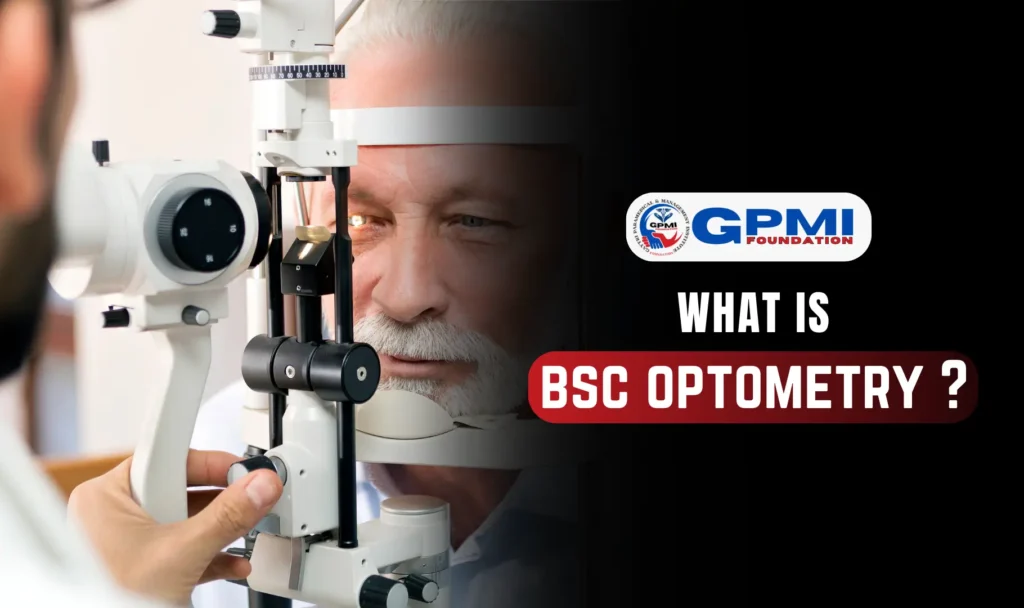
BSc Optometry is a 4-year undergraduate course (3 years of academic study and 1 year of internship). The program is specially designed to give students a deep understanding of the human eye, vision science, optical instruments, and clinical practices. It combines both theory and practical training, so students can learn how to examine eyes, prescribe lenses, and manage patients in real-life situations.
Optometrists are not eye surgeons like ophthalmologists, but they are highly skilled professionals who play an important role in eye care. They can:
- Perform detailed eye tests to check vision and eye health
- Prescribe spectacles and contact lenses for clear vision
- Detect vision defects and common eye diseases in the early stages
- Provide management and referral for patients with serious eye problems
- Offer rehabilitation support for patients with partial or low vision
In simple words, an optometrist acts as the primary healthcare provider for eye problems, helping people improve their quality of life by ensuring healthy eyesight. The course also prepares students to handle modern diagnostic machines, optical labs, and clinical practices, making them job-ready in the growing healthcare industry.
Bsc Optometry Course Details
BSc Optometry is a 4-year undergraduate course (3 years academics + 1-year internship) that trains students in eye care, vision testing, and optical sciences. This guide explains all key details like eligibility, admission process, fees, syllabus, career scope, and salary in India & abroad (2026), helping students plan their career in optometry.
Why Choose BSc Optometry in 2026?
In 2026 and beyond, the demand for trained optometrists will continue to grow because:
- Rising screen time: More people are using mobiles, laptops, and TVs, leading to vision problems.
- Awareness of eye care: People are becoming more conscious about eye health.
- Increasing population: More people mean more demand for eye care professionals.
- Advanced technology: New machines and diagnostic tools require skilled optometrists.
So, if you want a secure, respected, and growing career, BSc Optometry is one of the best options.
Eligibility Criteria for BSc Optometry
To take admission in the BSc Optometry course in India, you must meet certain conditions. These rules ensure that students have the right educational background and basic knowledge of science subjects.
- Educational Qualification: Students must pass Class 12 (10+2) with Physics, Chemistry, and Biology (PCB) as main subjects. Some colleges also accept students with Mathematics instead of Biology, but Biology is preferred since optometry is closely related to human anatomy and health.
- Minimum Marks: Most colleges require at least 50% marks in Class 12. However, reputed universities may ask for higher scores (55–60%). For reserved categories (SC, ST, OBC), there may be relaxation in marks.
- Age Limit: Students should be at least 17 years old at the time of admission. Some universities have an upper age limit of 25 years, but many private colleges have no upper age restriction.
- Additional Requirements: Some institutes may ask for a medical fitness certificate, ensuring that the student has normal eyesight and physical fitness to pursue the course.
Tip: Always check the eligibility criteria of the particular university before applying because rules may differ slightly from college to college.
Admission Process for BSc Optometry 2026
The admission process in BSc Optometry is simple, but it may vary depending on the college or university. Broadly, there are two main ways:
- Merit-Based Admission
- Many government and private colleges give admission on the basis of Class 12 marks.
- A merit list is prepared, and students are allotted seats according to their ranks.
- Higher marks in Physics, Chemistry, and Biology increase your chances of getting admission in top colleges.
- Entrance Exam-Based Admission
- Some universities conduct entrance exams to select students.
- Popular exams include NEET-UG, CUET, and university-level entrance tests.
- After clearing the exam, students may also have to go through counseling and interview rounds.
- Direct Admission (Management Quota)
- In private colleges, some seats are reserved under management quota.
- Students can get admission directly by paying the prescribed fee, even if their marks are slightly lower.
Tip: Start preparing early if you are planning for colleges with entrance exams. For merit-based admission, focus on scoring good marks in Class 12.
Duration of BSc Optometry
The total duration of the course is 4 years:
- 3 years academic study – Theory and practical classes.
- 1 year internship – Hands-on clinical training in hospitals, clinics, or optical centers.
BSc Optometry Course Fees
Government Colleges
Government colleges offering BSc Optometry are usually more affordable because they are funded and supported by the state or central government. The total fee for the entire course may range between ₹40,000 to ₹1,00,000, which makes it budget-friendly for students from middle-class families.
These colleges also provide additional benefits such as scholarships, reserved category fee relaxations, and lower hostel charges. Another big advantage of studying in a government college is the strong clinical exposure since most of them are attached to large government hospitals where students get to work with a wide variety of patients.
However, admission is very competitive, and students usually need to score high marks or clear entrance exams to secure a seat.
Private Colleges
Private colleges, on the other hand, charge a higher fee for BSc Optometry, usually between ₹2,00,000 to ₹5,00,000 for the entire course. The main reason is that private institutions provide modern infrastructure, advanced optical labs, digital classrooms, and better placement opportunities.
Many private colleges have collaborations with reputed eye hospitals, optical brands, or international universities, which gives students an edge in career growth. Some also provide installment-based fee payment, scholarships, or education loan assistance to support students.
Getting admission in private colleges is relatively easier compared to government colleges, but students must carefully check the accreditation and recognition of the institute before applying.
Syllabus of BSc Optometry (2026 Updated)
The syllabus may vary, but most universities cover the following subjects:
Year 1
- General Anatomy and Physiology
- Ocular Anatomy and Physiology
- Biochemistry
- Physics and Optics
- Introduction to Optometry
- English & Communication Skills
Year 2
- Visual Optics
- Ocular Pathology
- Microbiology and Pharmacology
- Clinical Optometry – I
- Optometric Instruments
- Contact Lens Studies
Year 3
- Advanced Clinical Optometry – II
- Low Vision Aids and Rehabilitation
- Pediatric Optometry
- Binocular Vision and Orthoptics
- Public Health and Community Optometry
- Research Methodology
Year 4 (Internship)
- Hospital-based training
- Eye testing
- Assisting in surgeries
- Managing optical shops
- Patient counseling
This curriculum makes students job-ready with both theory and practical knowledge.
Skills Required to Become an Optometrist
To become a successful optometrist, you need these skills:
- Good Communication: To talk with patients politely.
- Observation Skills: To detect small eye issues.
- Technical Knowledge: To handle optical machines.
- Problem Solving: To give correct solutions to patients.
- Patience & Empathy: To treat patients with care.
Career Scope After BSc Optometry
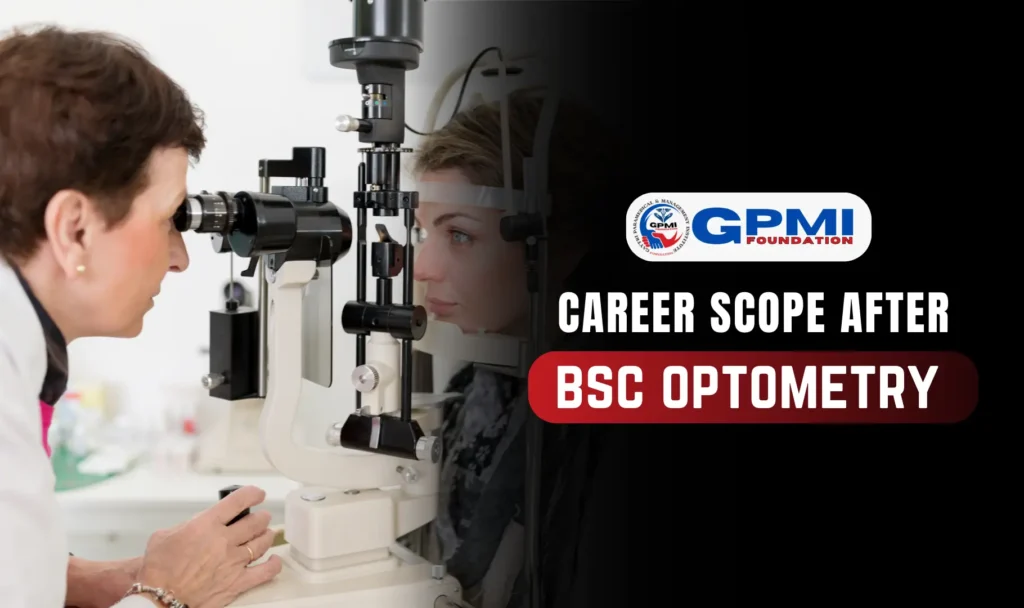
The scope of optometry is expanding every year due to the rise in eye-related problems and increasing awareness about eye health. After completing this course, students can explore multiple career paths in both India and abroad.
Job Roles After BSc Optometry
- Clinical Optometrist: Work in hospitals, eye clinics, and private practices to diagnose vision problems.
- Optical Consultant: Join retail optical chains like Lenskart, Titan Eye+, or Specsavers.
- Contact Lens Specialist: Specialize in fitting and advising patients about different types of contact lenses.
- Vision Therapist: Work with patients having binocular vision or lazy eye problems.
- Low Vision Specialist: Assist patients with partial blindness or permanent vision loss.
- Academic Professor: Teach in colleges or universities offering optometry courses.
- Researcher: Join labs and research institutes working on advanced eye care technologies.
Employment Areas
Optometrists can find jobs in:
- Government and private hospitals
- Multispecialty healthcare centers
- Eye care clinics and laser centers
- Optical retail chains
- NGOs and community eye care programs
- Eyewear manufacturing companies
- Teaching and training institutes
The scope is not just limited to clinical practice. Optometrists can also enter healthcare management, product marketing, and medical research, making it a versatile career option.
Salary After BSc Optometry in India & Abroad (2026)
The salary after BSc Optometry in 2026 varies based on location and experience. In India, freshers can start with ₹2.5–4.5 Lakh per year, while experienced professionals may earn up to ₹10 Lakh annually. Abroad, optometrists enjoy higher pay scales, ranging from ₹20–40 Lakh per year, along with better career growth opportunities.
Salary After BSc Optometry in India (2026)
In India in 2026, optometry is shaping up to be a financially stable and rewarding profession—especially for those committed to excellence and skill development. Entry-level optometrists (0–2 years) can expect a starting salary ranging from ₹2.5 to ₹4.5 lakh per year, depending on where they work, whether it’s a hospital, clinic, or optical retail chain.
As optometrists gain experience and specialization, their earning potential increases significantly. Mid-level professionals (3–5 years) often earn between ₹4.5 to ₹6 lakh annually, frequently stepping into roles like senior consultant or department supervisor in clinical setups.
For those with 5+ years of experience, especially those who take on managerial roles or launch their own clinics or optical businesses, annual incomes of ₹6 to ₹10 lakh are attainable—sometimes even higher, depending on the scale and reputation of their enterprise.
Salary After BSc Optometry Abroad (2026)
Optometrists pursuing international careers will find even greater financial rewards. In countries like the USA, UK, Canada, Australia, and Gulf nations, starting salaries can reach the equivalent of ₹20 to ₹40 lakh per year, based on local standards and experience level.
Countries such as the U.S. and Canada also offer structured growth through professional certifications and specialization in areas like pediatric optometry, low vision therapy, or specialty contact lenses—each adding to earning potential and career advancement.
Additionally, working abroad often provides the benefits of upgraded clinical infrastructure, advanced technology, and a global standard of professional development, enriching both income and expertise for practicing optometrists.
Future Scope of Optometry in 2026 and Beyond
The future of optometry looks very bright in India as well as abroad. Here’s why:
- Rising screen time: Excessive use of mobiles and computers is increasing eye problems like myopia and dry eyes.
- Aging population: More elderly people will need treatment for cataracts, glaucoma, and other eye conditions.
- Advanced technology: New machines, AI-based eye testing, and smart contact lenses will need trained professionals.
- Global opportunities: The shortage of optometrists abroad is opening career doors for Indian graduates.
By 2026, the demand for trained optometrists is expected to grow by 25–30%, making it one of the most promising healthcare careers.
Top Colleges for BSc Optometry in India
Some popular colleges offering BSc Optometry are:
- All India Institute of Medical Sciences (AIIMS), Delhi
- Manipal Academy of Higher Education, Manipal
- Bharati Vidyapeeth Deemed University, Pune
- Amity University, Noida
- Dr. D. Y. Patil Vidyapeeth, Pune
- Christian Medical College (CMC), Vellore
Advantages of Choosing BSc Optometry
- Growing demand in India and abroad.
- Respectful and noble healthcare profession.
- Opportunities in clinical practice, teaching, and research.
- Option to become an entrepreneur by starting an optical shop.
- Job security with good salary.
Challenges in Optometry Career
Like every profession, optometry also has some challenges. Knowing these in advance can help students prepare themselves better for the future.
- Long Working Hours in Hospitals:
Optometrists often work in hospitals, eye clinics, or optical stores where the duty hours can be long. Sometimes they may have to attend emergency cases or handle a large number of patients in a day. This can be tiring, but it also builds stamina and experience. - Continuous Learning of New Technologies:
Eye care is an area where new machines, diagnostic tools, and treatments keep coming. An optometrist must keep upgrading their knowledge and skills through workshops, training sessions, or advanced studies. This continuous learning can feel challenging, but it also makes the career exciting and future-proof. - Handling Different Types of Patients:
Every patient is different. Some may be very cooperative, while others may be nervous, impatient, or even uncooperative during eye tests. An optometrist needs patience, empathy, and good communication skills to deal with all kinds of patients. - Balancing Clinical and Business Aspects:
For those who start their own optical shop or clinic, it can be challenging to balance patient care with business responsibilities like staff management, finance, and marketing. - High Responsibility:
Since eyes are one of the most sensitive organs, an optometrist carries a big responsibility. A small mistake in diagnosis or prescription can affect someone’s vision. This makes the job both challenging and very important.
But with dedication, practice, and continuous improvement, these challenges can be managed easily. In fact, overcoming these challenges helps an optometrist become more skilled, confident, and successful in their career.
Conclusion
The BSc Optometry course in 2026 is one of the best career options for students who want to enter the healthcare sector and focus on eye care. With growing eye problems, digital lifestyle, and advanced technology, optometrists will continue to play a vital role.
If you have interest in biology, healthcare, and helping people see the world better, then BSc Optometry is a golden opportunity for you. After completing the course, you can work in reputed hospitals, clinics, or even start your own practice.
So, take the right step today and secure your future in the booming field of eye care.
Frequently Asked Questions (FAQs) about BSc Optometry Course
1. What is the BSc Optometry course?
BSc Optometry is a 4-year undergraduate course that trains students to examine, diagnose, and manage vision problems. It includes 3 years of theory and 1 year of internship.
2. Who can apply for BSc Optometry?
Students who have passed Class 12 with Physics, Chemistry, and Biology (PCB) are eligible. Some colleges also allow students with Mathematics.
3. What is the duration of the course?
The duration of BSc Optometry is 4 years (3 years study + 1 year internship).
4. Is BSc Optometry better than BSc Nursing?
Both are good courses in healthcare. Optometry focuses on eye care, while Nursing covers overall patient care. If you are interested in vision and eye health, optometry is a better choice.
5. What is the average salary after BSc Optometry in India?
Fresh graduates can earn between ₹2.5 – ₹4.5 Lakh per year. With experience, the salary can go up to ₹8–10 Lakh per year.
6. Can I do BSc Optometry without NEET?
Yes. NEET is not compulsory for most colleges. Some universities take admission based on merit, while others conduct their own entrance exams.
7. What are the job opportunities after BSc Optometry?
You can work as a clinical optometrist, contact lens specialist, vision therapist, rehabilitation expert, researcher, or optical shop consultant.
8. Can I open my own clinic after BSc Optometry?
Yes, after completing the course and required license (if applicable in your state/country), you can start your own optical shop or eye care clinic.
9. Is BSc Optometry a doctor degree?
No, optometrists are not medical doctors like ophthalmologists. But they are recognized as primary healthcare professionals for eye care.
10. Can I study further after BSc Optometry?
Yes, you can go for MSc Optometry, MBA in Healthcare, or PhD in Optometry to increase your knowledge and career growth.
11. Is there a demand for optometrists abroad?
Yes, optometrists are in high demand in countries like USA, UK, Canada, Australia, and Gulf countries. Salary abroad is much higher compared to India.
12. Which is the best college for BSc Optometry in India?
Top colleges include AIIMS Delhi, Manipal University, CMC Vellore, DY Patil University, and Gaytri Paramedical & Management Institute (GPMI).